fundamentals
- Progress: Done
Concepts
Architecture
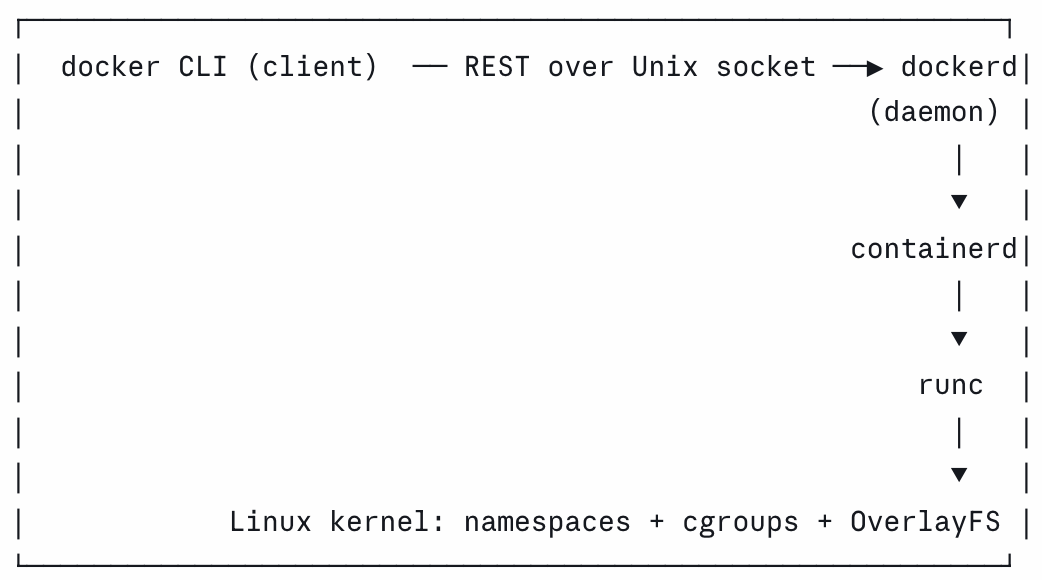
- dockerd: Long-running background process
- containerd: Lower-level runtime
- runc: Executes syscalls
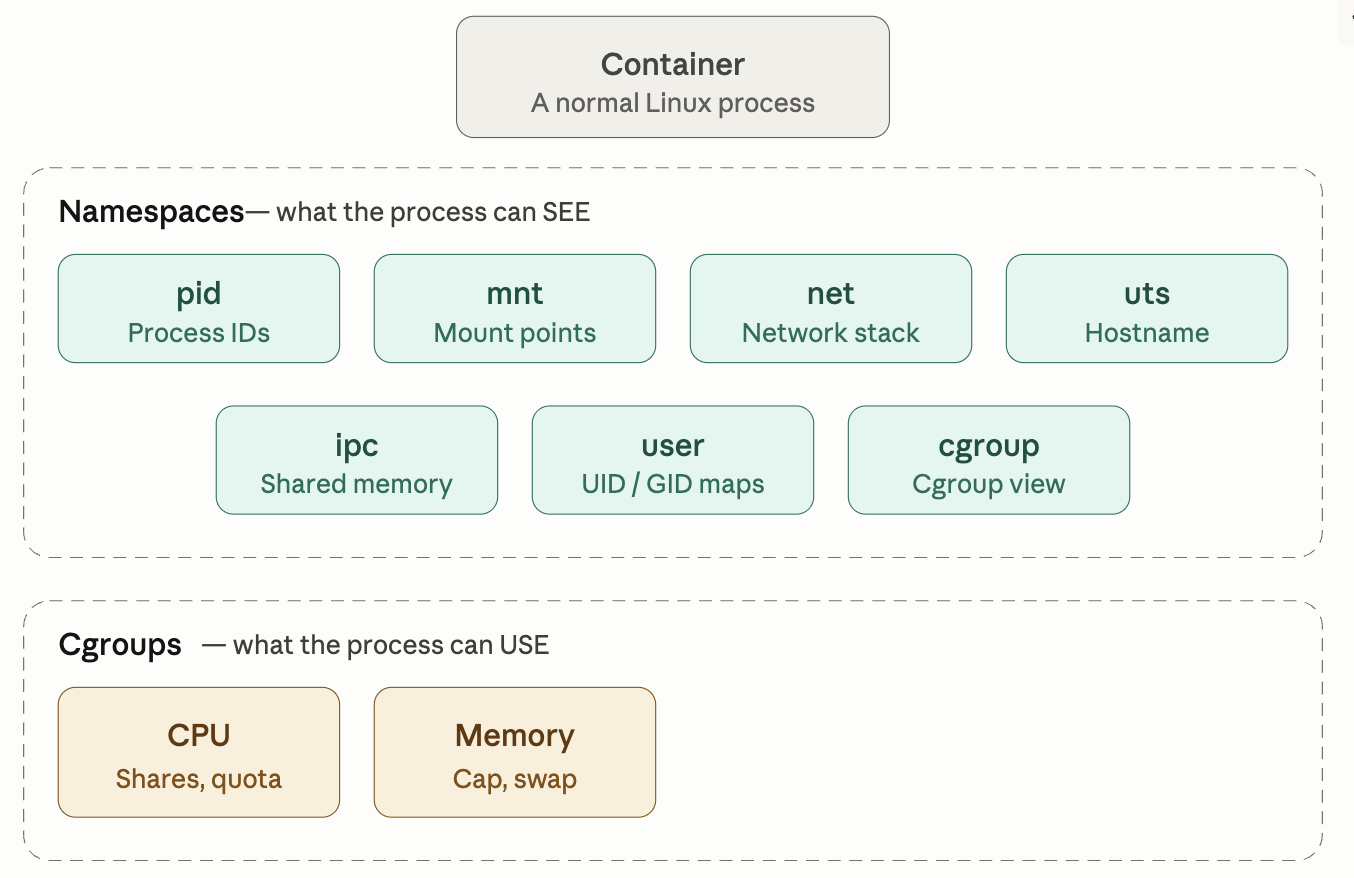
Overview
Commands
# Create and start a container from an image
# clone() with namespace flags, set cgroups, exec the entrypoint
docker run

# List running containers (-a for stopped too)
# Reads daemon state
docker ps

# Run a new process inside an existing container's namespaces
# setns() into target's namespaces, then exec
docker exec

# Show stdout/stderr captured by the daemon
# Reads the log driver's file
docker logs

# Send SIGTERM, wait --time, then SIGKILL
# Signal to PID 1 of the container
docker stop

# Remove a stopped container
# Frees the OverlayFS upper dir
docker rm
Best practices
- Pin tags: Pin specific versions like
redis:7.2-alpineinstead ofredis:latest - Container naming: Name containers using
--name - Explicit port: Map ports using
-p HOST:CONTAINERasEXPOSEis only documentation - Execution modes:
-dfor background services,-itfor interactive terminal commands - Restart policy:
--restart unless-stoppedprevents downtime from crashes or reboots - Lifecycle:
docker rmdeletes the container writable layer
Examples
docker run --rm -it alpine:3.20 sh
/ #

docker run --rm python:3.12-slim python -c "import sys; print(sys.version)"
Implementation
docker run -d \
  --name dev-redis \
  -p 127.0.0.1:6379:6379 \
  --restart unless-stopped \
  redis:7.2-alpine

docker ps -f name=dev-redis
docker port dev-redis
docker exec dev-redis redis-cli PING
docker logs dev-redis
Comparison
Image base variations
redis:latest: Worst choiceredis:7.2: Debian based, heavierredis:7.2-alpine: Alpine based, lightweight, best for Dev/CIredis@sha256:...: Digest pin, best for production
Restart policy behaviors
none: Default, stays dead on crash or daemon restartson-failure: Restarts only when exiting with error codealways: Forces restart, even after manual stopunless-stopped: Restarts on crash or machine reboot
Alpine
Concepts
- Alpine image: Built on Alpine Linux instead of heavy distributions like Ubuntu or Debian
- Philosophy: Only includes files strictly necessary to run the process
- Base size: Approximately 5 MB
Components
- BusyBox: Combines common UNIX utilities into a single optimized executable file
- musl libc: Replaces glibc as interface to the Linux kernel
- Characteristics: Lightweight, fast, designed for embedded systems and minimal environments